My Vision for Kensa Health: Connecting Health and Social Care Around the Person

By Andrew Pooley, CEO and Founder, Kensa Health
Health and social care are part of one continuum. Connecting them around the person is a huge opportunity to improve people’s lives and build sustainable services that can meet their changing needs.
Someone may need support to remain independent, help managing a long-term condition, or support during hospital treatment and recovery. Their needs continue through each stage, even when the organisations responsible for supporting them change.
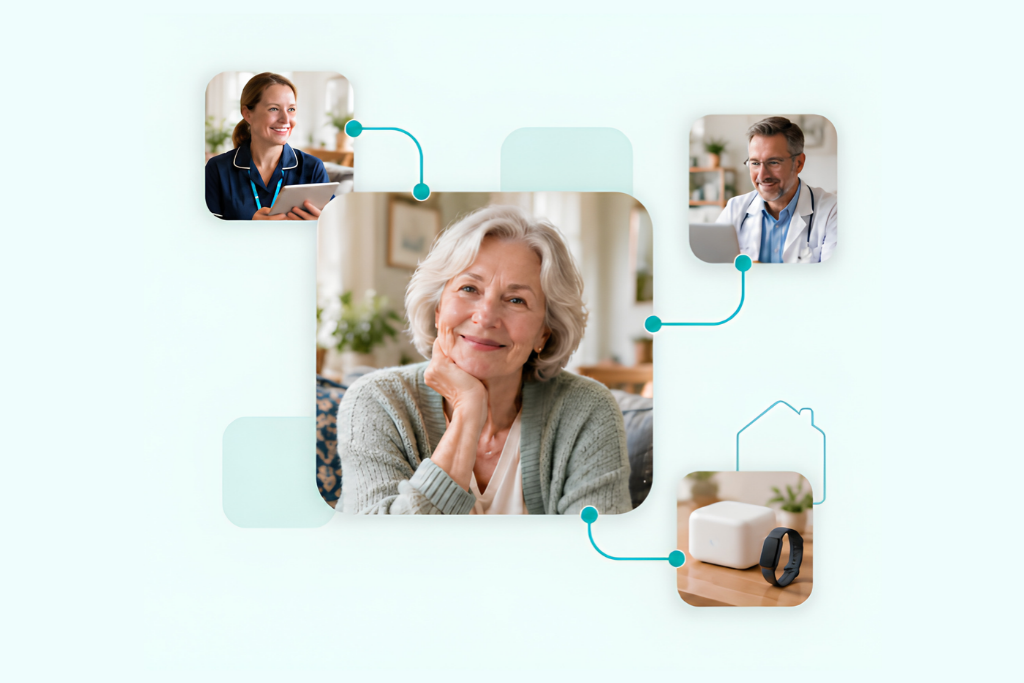
I believe connecting people, devices and care teams within a trusted, regulated environment could make that continuity far more practical.
Information could follow the person, clinical decisions could draw on a fuller picture of their circumstances, and support could respond sooner when their needs change.
Building a connected model of care
This is where a network effect becomes possible.
Each additional service can contribute information or capabilities that make the network more useful to those already connected. A homecare team gains context from a clinical care plan. A clinician gains insight from observations made during daily visits. Both can make better-informed decisions about the same person.
Consider someone living at home with a long-term condition.
A care professional notices that they are less active or finding everyday tasks harder. A connected medical device records a change that merits review. Bringing those observations together with symptoms, medication and recent test results could help a clinician understand what is happening and decide on the next step.
The potential is earlier detection and a faster route to diagnosis and treatment.
Shared information can also reduce duplication. When relevant information is available to the professionals involved in someone’s care, there is less need to collect the same history or repeat assessments already completed.
For the person, that could mean fewer repeated assessments and less time explaining the same history to different professionals.
Supporting more care at home
Where clinically appropriate, connected monitoring and remote review could also reduce unnecessary visits to GPs and hospital clinics.
People could receive more support at home, with clearer routes to help when they need it. The value includes time, convenience and independence, alongside the clinical outcome.
This is particularly important as health and social care systems look for sustainable ways to support people with increasingly complex needs.
The aim should not simply be to introduce more technology. Technology should make it easier for people to access the right support, at the right time and in the right place.
For many people, that place will be home.
Creating continuity between services
The benefits could continue when someone moves between services.
A hospital team could see what support is available at home before planning discharge. Community and care teams could receive an updated treatment plan and know who is responsible for follow-up. Families could have greater clarity about what to expect and whom to contact.
This kind of continuity matters because people experience their care as one journey. They do not experience it as separate NHS, social care, community and technology services.
The challenge is therefore to connect those services around the person, while maintaining clear professional responsibilities and appropriate governance.
Turning connected data into better decisions
Across a wider network, we could also learn which interventions work best for different people.
Linking information about care, daily functioning and outcomes could help identify where earlier support makes a difference. That knowledge could improve care pathways and help commissioners direct resources towards the people most likely to benefit.
Over time, well-governed data could support better tools for identifying risk and assisting diagnosis.
Their value would depend on relevant, accurate data and validation in the populations where they are used. The opportunity is to turn what we learn across many services into better decisions for each person.
Joined-up pathway and system-wide analytics will be essential. We need to understand impact across the whole system, rather than looking at individual services in isolation.
That means measuring more than clinical outcomes. We should also understand people’s experience and independence, avoidable primary and secondary care activity, staff workload, the impact on families and the full cost of delivery.
Improved access may initially reveal unmet need and increase appropriate care. The test is whether people receive better, timely support.
Trust and regulation must come first
A connected model of health and social care needs a strong foundation of trust.
A regulated environment gives this network clear responsibilities. Medical devices need appropriate assurance for their intended use. Clinical pathways must define who reviews information, what requires escalation and which team can respond.
People should understand how the service works, who can access their information and how to obtain help.
They should receive support to use the technology, with their preferences and circumstances reflected in the care offered.
Trust develops through those everyday experiences.
Technology should support the relationship between people and professionals, not replace the responsibility and judgement that sit behind good care.
Making the model commercially sustainable
Making this happen also requires commercial realism. We need to work with the health and social care system as it exists today.
Our business model must be viable within its current services, budgets and procurement arrangements, while creating opportunities to connect them.
Current procurement across health and social care involves multiple levels, with local organisations responsible for their own buying decisions. A network therefore needs a practical route into services that commissioners already have the authority and resources to purchase.
That could begin with a defined need, such as monitoring people after discharge, supporting a virtual ward or helping people remain independent at home.
Each contract should fund a service with clear responsibilities and measurable value. The proposition has to work for that buyer, within the budget and operational constraints they face.
We can then connect those services.
For example, an NHS monitoring service and a separately commissioned homecare service could share relevant information and agree how concerns are escalated. Their contracts may remain separate, while the person experiences more coordinated care.
This requires agreements on information sharing, professional responsibilities and payment for any additional work, but it is absolutely achievable.
Building value as the network grows
Each new contract should create an opportunity to strengthen those connections.
A service that already supports people at home could become more useful when it can coordinate with community nursing or a hospital team. The new participant benefits from existing information and relationships, while contributing something useful to the others.
The financial case needs the same discipline.
If additional community support helps avoid hospital activity, the organisation paying for that support may not receive the direct financial benefit.
We need to make those costs and benefits visible, agree who funds the work and demonstrate value for the commissioners involved.
There are also potential economies of scale. Providers could share device logistics, training, technical integrations and elements of service infrastructure across several pathways. That could make additional services more affordable and support wider access, provided the workforce and clinical response capacity grow with demand.
Technology as an enabler, not the whole solution
I expect large technology companies to find this market harder to dominate through consumer reach alone.
They will undoubtedly excel in the wellness and fitness market. However, the regulated services element of this approach is different. Clinical responsibility, trusted relationships and fragmented commissioning require a different route to market.
Devices and software need to become part of funded services, supported by teams that can act on the information.
Technology companies can still be important partners. Many large technology companies have developed medical-grade devices, demonstrating that they can meet the technical requirements.
Platforms should be device agnostic, taking advantage of innovation and competition. Healthcare companies can combine these capabilities with the clinical relationships, local delivery, and commissioning knowledge needed to organise care effectively.
Building for today while creating a better future
The opportunity is to build services that are useful today and become more useful as the network grows.
Each connection should help people receive earlier support, give professionals a clearer understanding of their needs, or make it easier for teams to act together.
A dependable service and visible outcomes give commissioners a reason to expand it.
Imagine that continuity extending across a person’s life.
Support at home, clinical monitoring, diagnostics, treatment, and recovery could become part of a coordinated service that adapts as needs change. A trusted, regulated network could help more people stay independent, receive care sooner and spend more of their lives well at home.
Our vision for Kensa Health At Kensa Health, we are building this model by bringing together homecare, analytics and remote monitoring across health and social care.
Our aim is to connect everyday support at home with clinical care, giving teams a fuller picture of each person’s needs and helping them respond sooner.
We are working within today’s commissioning and procurement arrangements, designing services that deliver value individually and become more useful as we connect them.
Each connection takes us towards more coordinated care, helping people remain independent and receive more of their care safely at home.
Talk to Kensa Health
If your organisation is exploring opportunities to improve care at home, strengthen remote monitoring, use data more effectively or develop more connected services, we would welcome the opportunity to discuss your requirements.
To find out more about Kensa Health and our approach to connected health and social care, please contact our team on 0330 380 2236 or get in touch via our contact page.