
SPC analysis, made simpler
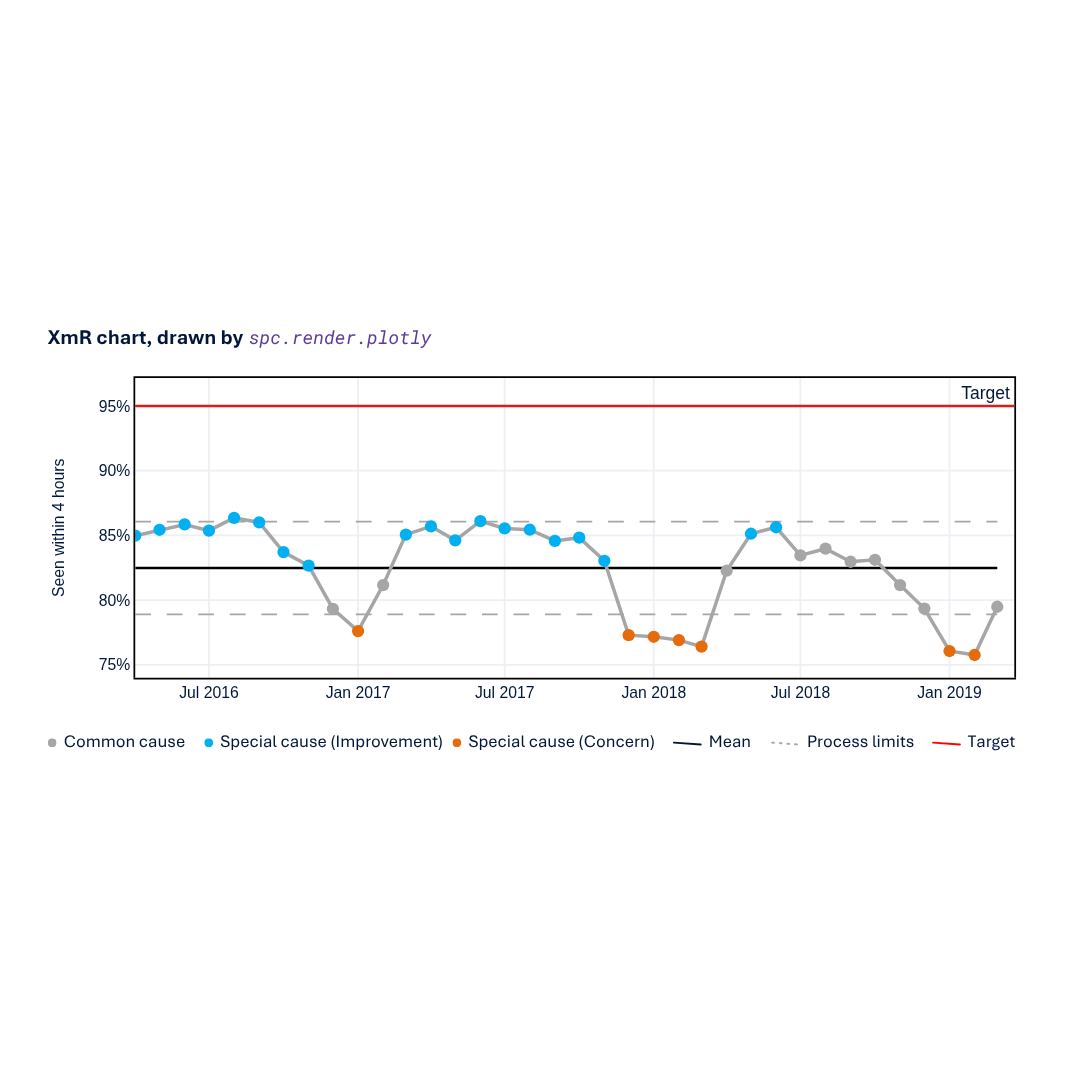
spc-lib-py helps healthcare analysts understand variation, identify changes worth investigating and assess whether a process can meet its target. It follows NHS England’s Making Data Count approach and works with familiar pandas DataFrames.
SPC analysis, made simpler
spc-lib-py helps healthcare analysts understand variation, identify changes worth investigating and assess whether a process can meet its target. It follows NHS England’s Making Data Count approach and works with familiar pandas DataFrames.


Built to save analysts time

Why use the library?
See what is really happening in your data, rather than reacting to every rise or fall. The library helps you:
Identify meaningful change
Understand routine variation
Assess targets
Create useful outputs
Use the results to support clearer discussions about performance and where action may be needed.

Getting started
Three simple steps to explore the free, open-source library.
1. Visit GitHub
2. Install the library
3. Try it with your data
How Analysts Can Support Strategic Commissioning Through Actionable Intelligence
Strategic commissioning is changing how NHS organisations plan services, allocate resources and respond to population health needs.
Our article explores why analysts are central to this shift, and how connected data, understanding variation and forecasting future demand can support better commissioning decisions.